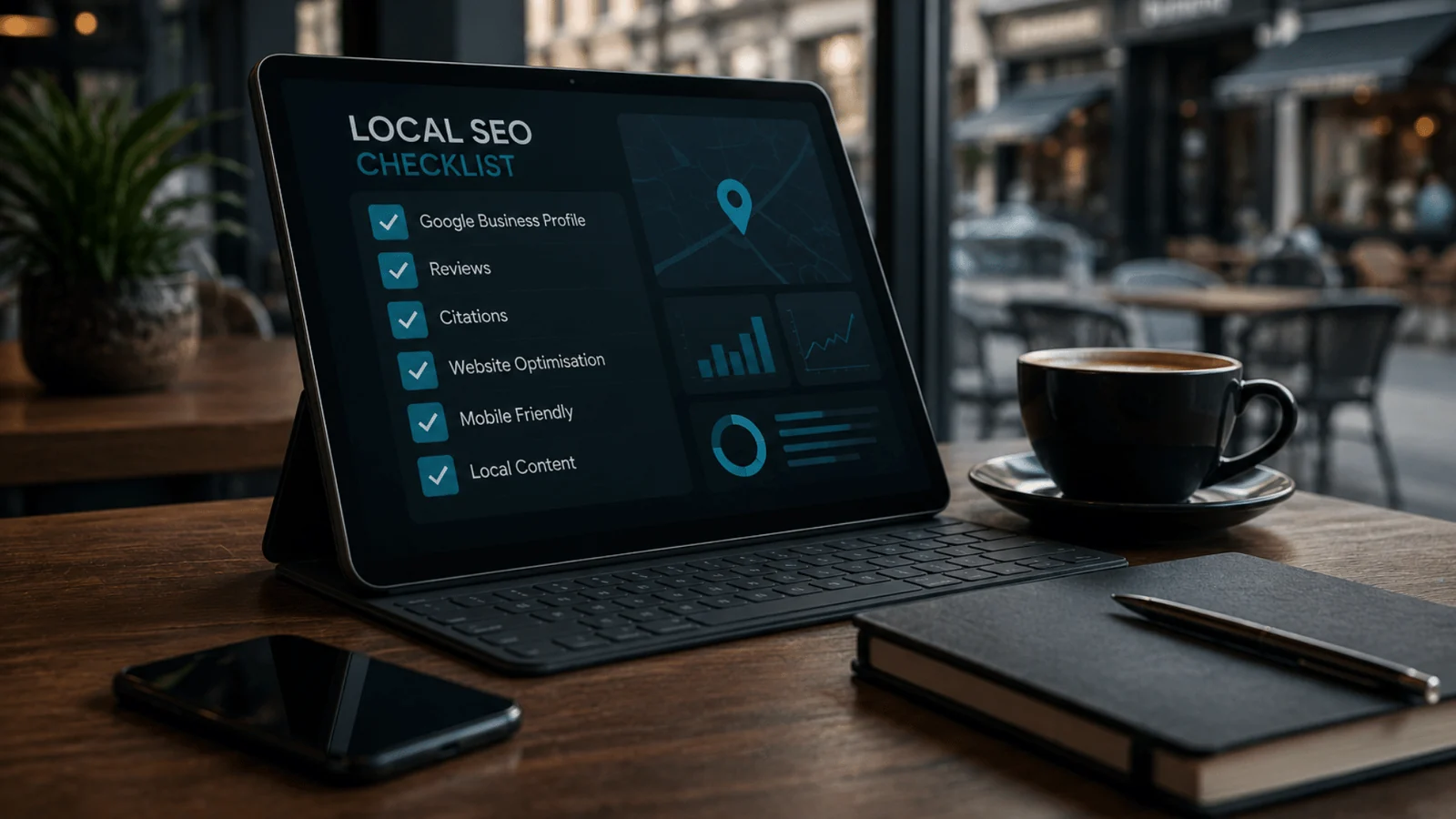

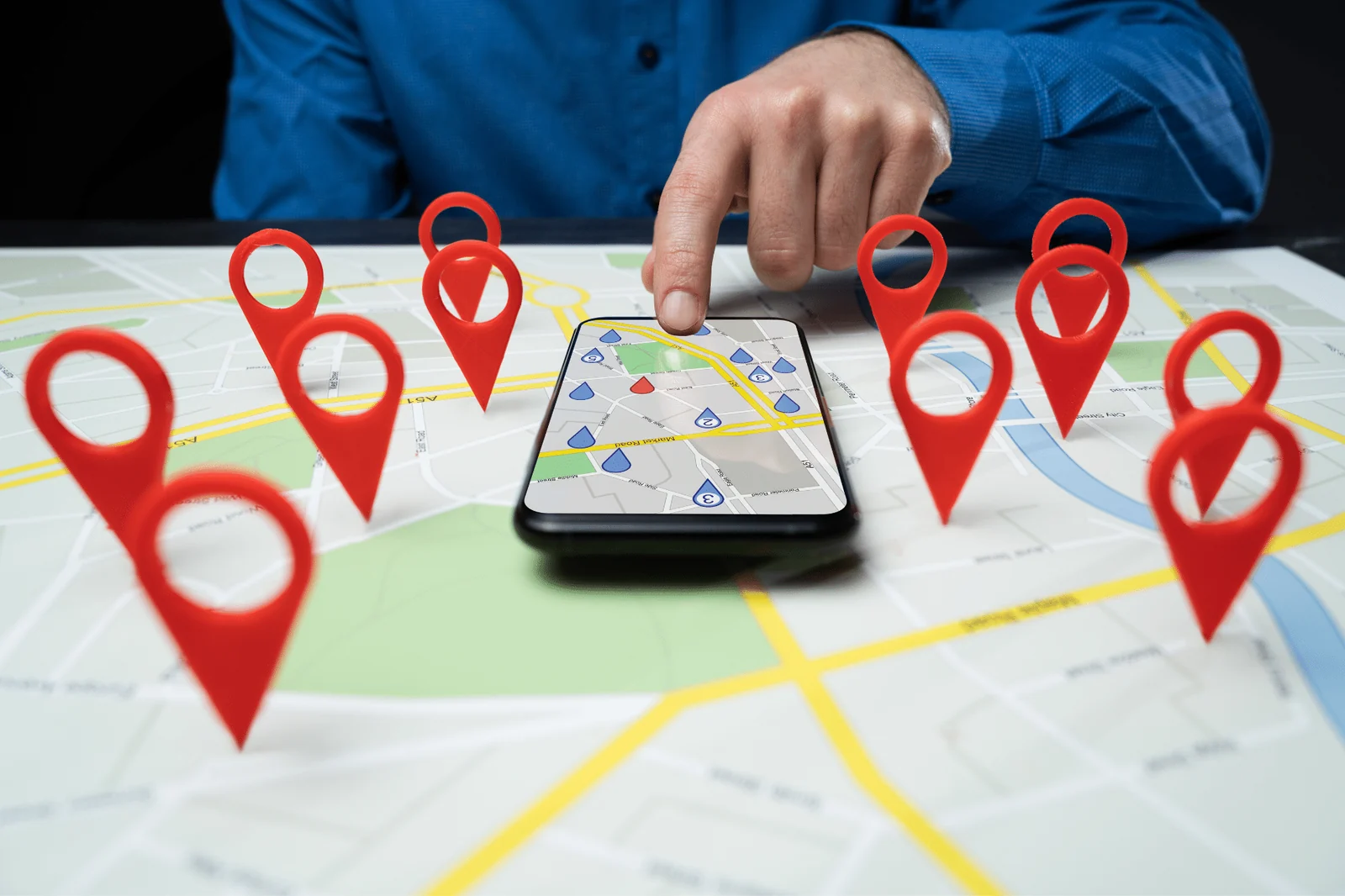
If you’re a small business owner, you’ve probably heard of Local SEO. But what is it, and why does it matter?
Put simply, it’s about making sure your business shows up when potential customers in your local area search online for products or services you offer. It’s the difference between being found and being forgotten.
The good news? You don’t need a degree in digital marketing to get it right. This guide will walk you through the key steps, cutting through the noise and giving you clear, practical advice you can act on today.
What is Local SEO?
Local SEO is a way to make sure your business appears in local search results, increasing your visibility to potential customers. It drives foot traffic, website visits, and customer calls, all of which can directly lift your sales and conversions.
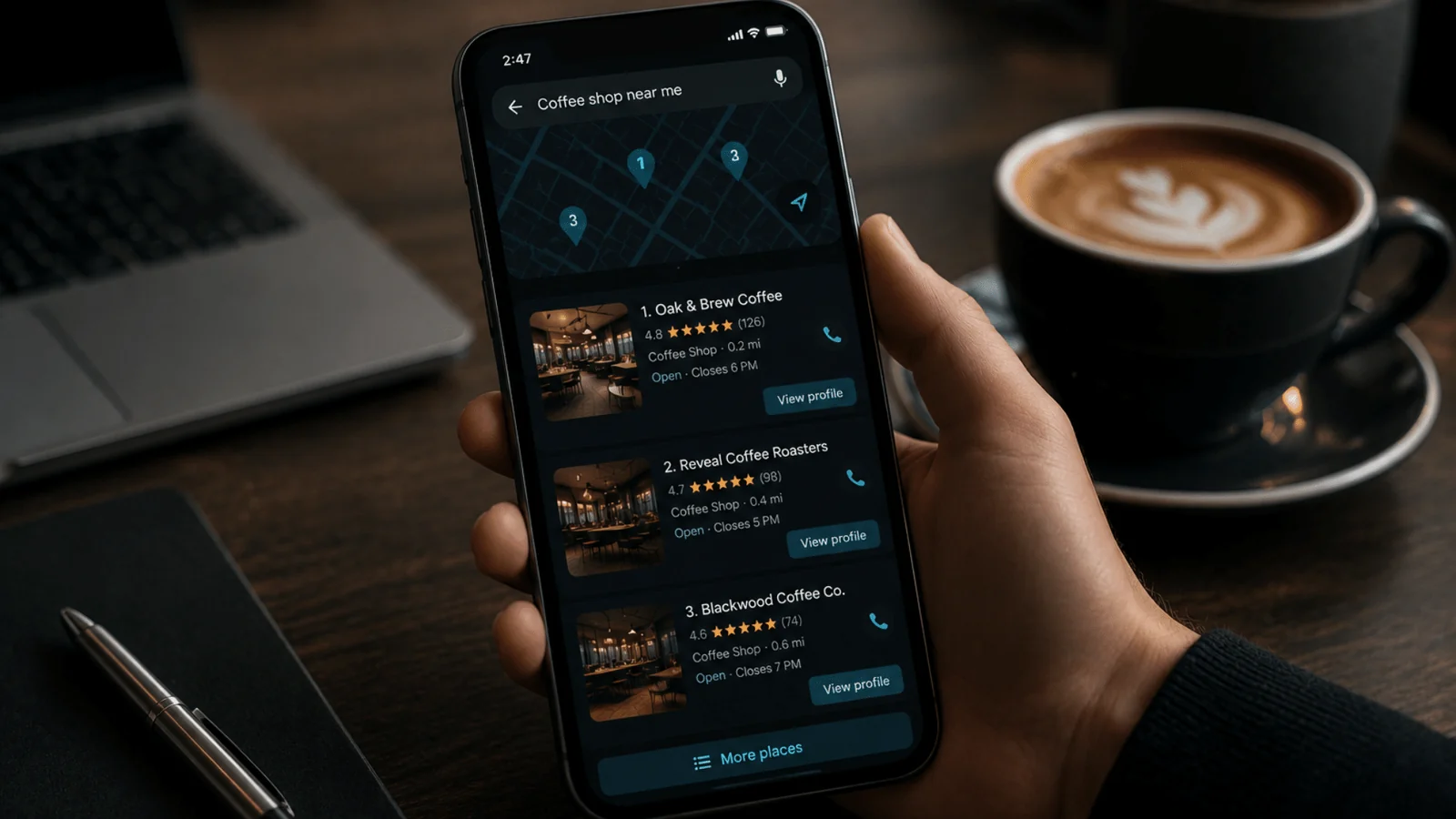
When someone pulls out their phone and searches for “plumber near Leamington Spa” or “best coffee shop in Warwick,” Local SEO determines whether your business pops up or not.
It’s about getting your business in front of the right people at the right time — people looking for what you offer in your local area. This is where Google Maps, the “local pack” (that box of local businesses at the top of Google search results), and online reviews come into play.
When done right, Local SEO drives targeted foot traffic, calls, and online inquiries straight to your business.
Why Local SEO Matters for Small Businesses
Most people aren’t flicking through the Yellow Pages anymore. They’re Googling it. Mobile searches for local businesses have skyrocketed, and if your business isn’t showing up, you’re missing out on foot traffic, website traffic, and brand awareness.
When your business appears in local search results, you’re more likely to get calls, clicks, and visits.
It’s that simple.
Plus, you’re not just getting any traffic — you’re getting local customers who are ready to buy. Local SEO builds trust with your audience by showcasing customer reviews, photos, and up-to-date information about your business.
Step 1: Claim and Optimise Your Google Business Profile
If you do nothing else, claim and optimise your Google Business Profile listing. This free tool puts your business on Google Maps and helps you appear in the local pack.
Action Steps:
- List your business name accurately — no keyword stuffing.
- Add your physical location and service areas — be precise and thorough.
- Include your phone number, website link, and business hours — keep these consistent across the web.
- Upload high-quality photos of your premises, products, and team.
- Encourage and respond to online reviews — aim for a steady flow of fresh reviews.
Your Google Business Profile is like a digital shopfront. It’s often the first thing people see when they’re searching for your services. Don’t leave it half-finished. Show off your best side with clear photos, honest reviews, and accurate details about what makes your business special.
Pro Tip: Use keywords naturally in your business description on your Google Business Profile. Don’t overdo it, but mentioning your primary services and location helps.
Step 2: Nail Your Local SEO Ranking Factors
There’s no magic wand, but there are some major factors that will push your local rankings higher. Here’s where to focus your efforts:
Action Steps:
- Online Reviews
- Ask your best customers to leave reviews on Google.
- Respond to every review — positive or negative — to show potential customers you’re engaged and care.
- Local Keywords
- Use free tools like Google’s Keyword Planner or paid tools like SEMrush to find what people are searching for. Start by entering broad industry terms like “plumbing services” or “coffee shop near me” and see what related terms people are actively searching for. Look for localised keywords with clear intent, like “emergency plumber Warwickshire” or “best coffee shop in Stratford,” and incorporate them into your website’s content and metadata.
- Add those keywords naturally to your website’s page titles, headings, and image alt text.
- NAP Consistency
- Ensure your Name, Address, and Phone number (NAP) is the same everywhere online. This includes your website, social media profiles, and online directories.
- On-Page SEO
- Include location-specific pages if you operate in multiple areas.
- Add location-relevant blog content to increase visibility.
- Optimise title tags, meta descriptions, and headings with local keywords.
- Mobile-Friendliness
- Since most local searches happen on mobile, your website must be mobile-friendly.
- Use Google’s Page Speed Insights to see how your site performs.
Pro Tip: Check your website’s speed and usability on mobile devices. If your site loads slowly or is hard to navigate on a phone, you’re losing potential customers.
Step 3: Build Citations and Business Listings
Local citations are mentions of your business on other websites. The more high-quality, consistent citations you have, the stronger your local SEO position.
Action Steps:
- Submit your business to key directories like:
- Yelp
- Bing Places
- TripAdvisor
- Industry-specific directories
- Check NAP Consistency on every listing. If your address or phone number changes, update it everywhere.
- Avoid duplicate listings, as they can confuse search engines and harm your rankings.
Pro Tip: Use tools like Moz Local or BrightLocal to manage and clean up your citations across multiple directories at once.
Step 4: Create Local Content That Matters
Google loves fresh, relevant content. Adding blog posts and pages about your local area helps you show up for more searches.
Action Steps:
- Write blog posts about local events, news, and tips that relate to your industry.
- Create location pages that talk about the areas you serve.
- Mention local landmarks, events, and community updates that relate to your business.
Example: If you run a bakery, you could write a blog post like, “5 Local Events in [Your City] That Deserve a Celebration Cake.”
Pro Tip: Share your blog posts on your social media profiles to get more people reading them and visiting your site.
Step 5: Use SEO Tools to Track Progress
You can’t improve what you’re not measuring. SEO is an ongoing process, and tools help you spot what’s working and what’s not.
Action Steps:
- Set up Google Analytics to track website traffic.
- Use Google Search Console to track your search performance and fix errors.
- Use paid SEO tools like Ahrefs, SEMrush, or SE Ranking to monitor your keyword rankings.
Pro Tip: Review your data monthly to identify trends and opportunities to improve your local SEO efforts.
Step 6: Build Links from Local Sources
Links from other local businesses and media sites add to your site’s credibility. The more high-quality links you have, the higher your site’s authority.
Action Steps:
- Ask local organisations, suppliers, or charities you support to link to your site.
- Try to get listed on local chamber of commerce websites.
- Write guest blog posts for local business blogs or industry sites.
Step 7: Keep Your SEO Strategy Fresh
Local SEO isn’t a “set it and forget it” job. Search engines change, and so should your strategy. Check in on your progress every month.
Action Steps:
- Update your Google Business Profile if you change locations, business hours, or phone numbers.
- Refresh your website’s content regularly.
- Keep track of your competitors’ moves and adapt accordingly.
Pro Tip: Schedule a quarterly SEO review to ensure you’re not missing any new opportunities.
The Tools You’ll Need
- Google Business Profile — Absolutely essential.
- Google Analytics — Track your traffic and user behaviour.
- Google Search Console — Get insights into how your website ranks.
- SEO Tools like Ahrefs, Moz, or SEMrush — Track rankings and research keywords.
Final Thoughts
If you’re serious about getting more foot traffic, calls, and website visits from local customers, don’t ignore Local SEO. It’s one of the best ways to grow your small business without an enormous ad budget.
Start with your Google Business Profile. Focus on reviews. Get your NAP consistent. If you’re already doing that, it’s time to build citations, optimise your content, and track your results with tools.
SEO isn’t magic, but it works. If you want help or have questions, leave a comment below or drop me a message. No jargon, no hard sell — just simple, honest advice to help your business get found.