
If you run a small business and you’re not showing up on Google when people nearby search for what you do, you’re handing customers to your competitors. It’s as simple as that.
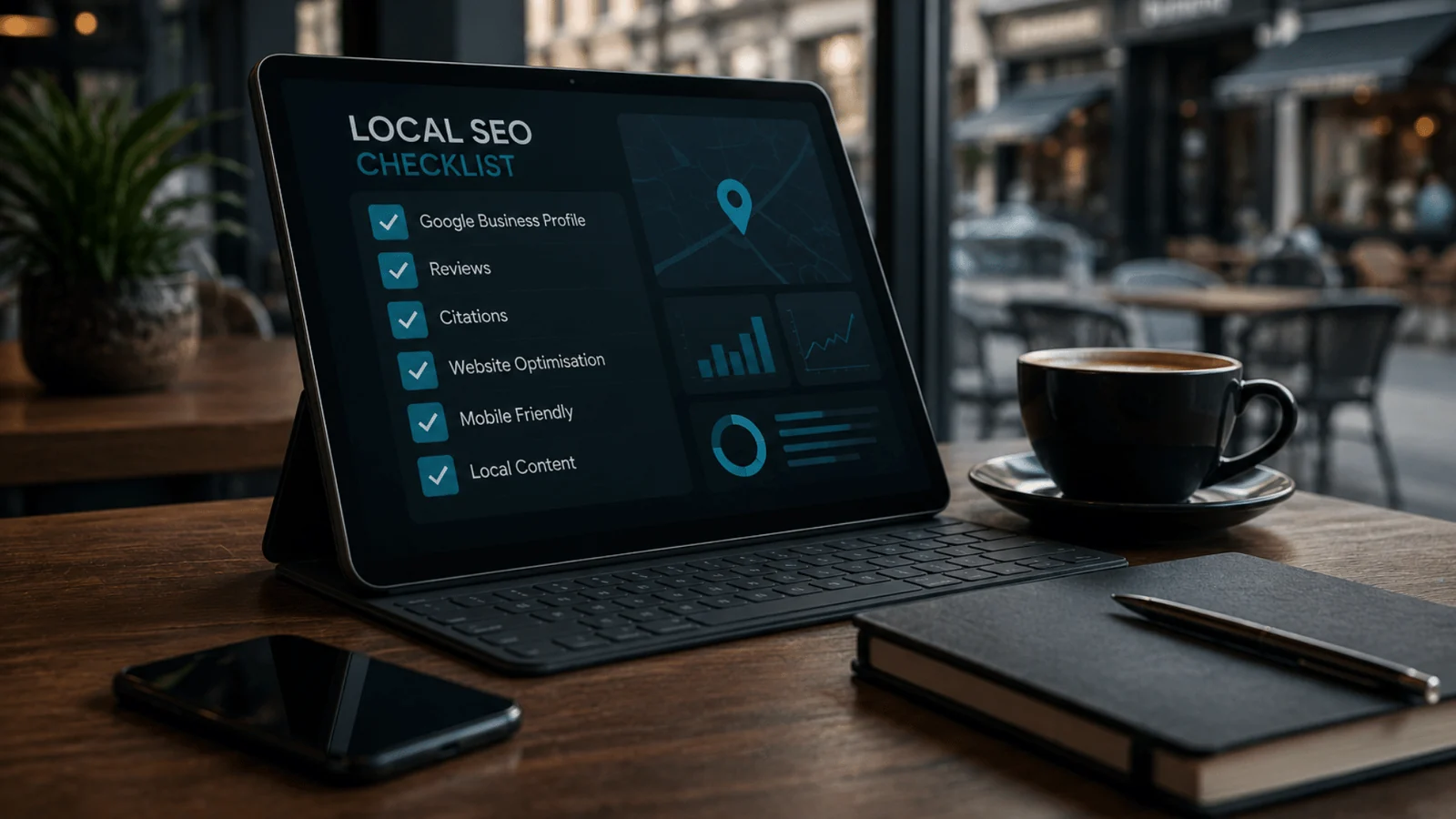
Local SEO doesn’t have to be complicated. But it does need to be done right. After working with small businesses across Coventry, Warwickshire and the wider Midlands, I’ve seen the same gaps come up time and time again. This checklist covers the ten things that make the biggest difference. Work through them, and you’ll be in a stronger position than most of your local competitors.
1. Claim and Verify Your Google Business Profile
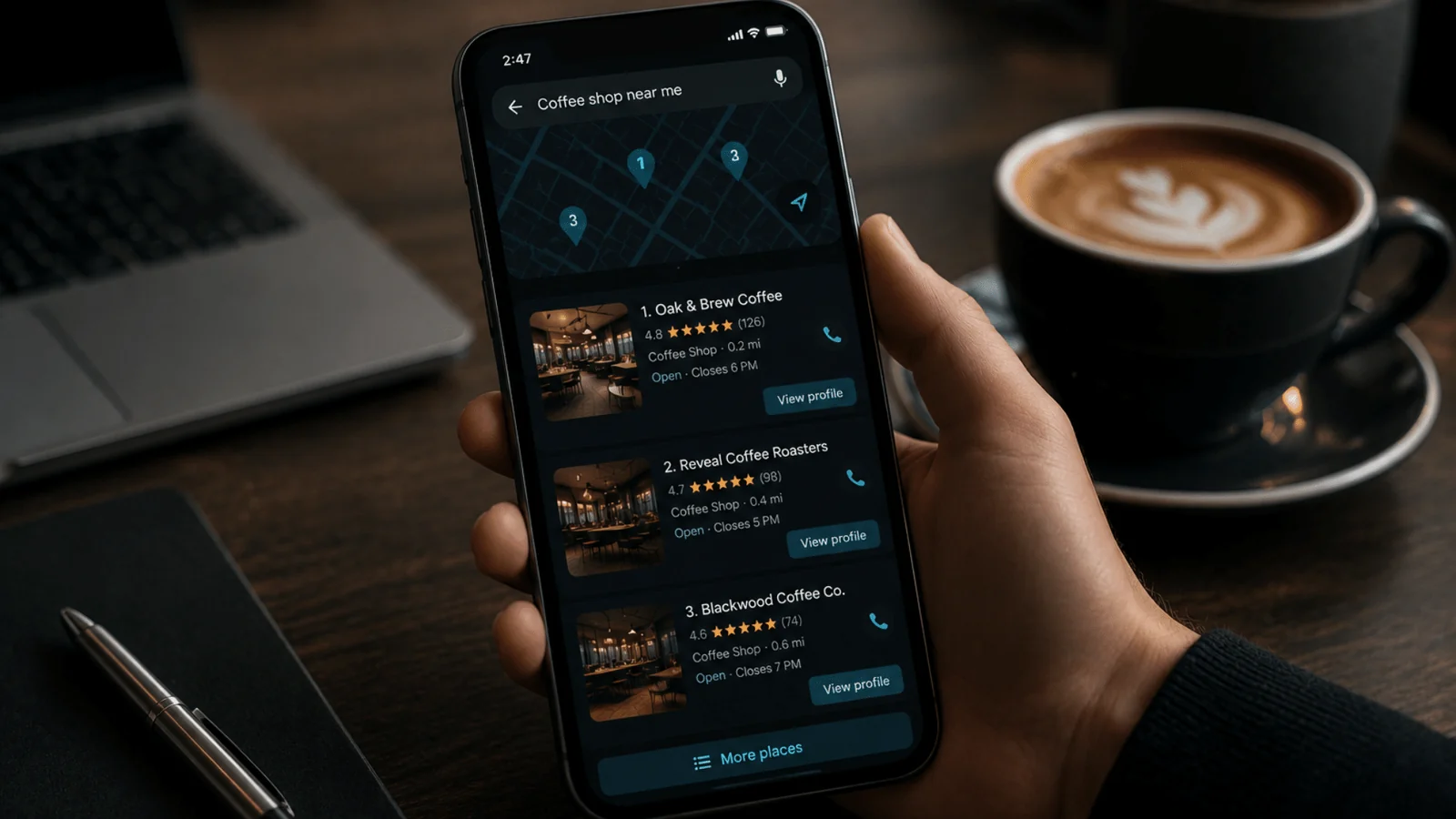
This is the single most important thing you can do for local SEO. Your Google Business Profile (GBP) is what appears in the Map Pack — that block of three business listings that shows up when someone searches for a local service.
If you haven’t claimed yours, go to business.google.com and follow the steps. Google will post a verification code to your address, which you’ll need to enter to confirm ownership. Once it’s verified, you control what appears.
If you already have a profile but haven’t touched it in months, it still needs work. Treat it as a live part of your marketing, not a one-off job.
Why it matters: Over 40% of all clicks in local search results go to businesses in the Map Pack. If you’re not there, you’re practically invisible.
2. Fill In Every Section of Your Profile
A half-finished GBP is a missed opportunity. Google rewards completeness. The more information you provide, the more confidence it has that your business is legitimate and relevant.
Make sure you’ve covered:
- Business name (exactly as it appears on your signage and website — no keyword stuffing)
- Primary and secondary categories
- Address and service area
- Phone number
- Website URL
- Opening hours (including holiday hours)
- Business description (use your main keywords naturally, keep it readable)
- Products or services with descriptions and prices where relevant
- Attributes (things like “free Wi-Fi”, “family-friendly”, “women-led business”)
I’ve audited profiles for businesses in Warwick and Leamington Spa where the categories were wrong, the description was blank, and half the services were missing. Getting the basics right costs nothing and makes an immediate difference.
3. Get Your NAP Consistent Everywhere
NAP stands for Name, Address and Phone number. Consistency matters because Google cross-references your business details across dozens of directories, data aggregators and review sites. If your address is listed differently on Google, Facebook, Yell and your website, it creates confusion — and Google doesn’t like confusion.
Check your details are identical on:
- Your own website (footer, contact page)
- Google Business Profile
- Facebook / Instagram / LinkedIn
- Bing Places
- Apple Maps
- Yell, Thomson Local, FreeIndex and other UK directories
- Any industry-specific directories relevant to your trade
Even small differences matter. “St” vs “Street”, “Road” vs “Rd” — they all count. Get it consistent.
4. Build Local Citations
A local citation is any mention of your business on another website that includes your name, address and phone number. Directories, data aggregators, review platforms, local business associations — they all count.
The most important UK directories to be listed on include:
- Google Business Profile
- Bing Places
- Apple Maps
- Yell.com
- Thomson Local
- FreeIndex
- Scoot
- Checkatrade or Rated People (for trades)
- The local Chamber of Commerce directory (there’s one for Coventry & Warwickshire)
Start with the major ones and work outward. Quality matters more than quantity. A consistent listing on 30 reputable sites beats an inconsistent one on 200.
5. Collect Google Reviews (and Respond to Them)
Reviews are one of the strongest local ranking signals Google uses. Businesses with more recent, positive reviews tend to rank higher — and they also convert better when customers find them.
The most effective way to get reviews is to ask. After a job is done or a service is delivered, send a follow-up message with a direct link to your review page. Make it easy. Don’t ask people to find you themselves.
You can generate your review link from Google Business Profile Manager. Share it via text, email or WhatsApp.
Then respond to every review. Thank the positive ones briefly and genuinely. Handle the negatives professionally — future customers are reading your responses just as much as the reviews themselves.
A good rule of thumb: if you’re doing good work in Warwickshire, your reviews should reflect that. Don’t rely on Google to assume it.
6. Optimise Your Website for Local Keywords
Your website and your Google Business Profile work together. Google looks for consistency between them, so your website should reflect the same services, locations and business name as your GBP.
For local SEO, this means:
- Including your town or city in your page titles, headings and body copy where it reads naturally
- Having a dedicated contact or location page with your full address, embedded Google Map and local phone number
- Mentioning nearby areas you serve (e.g. if you’re based in Warwick, mention Leamington Spa, Kenilworth and Stratford-upon-Avon)
- Using local keywords in your service pages — “roofing company in Coventry” rather than just “roofing company”
Don’t go overboard. Write for the person reading, not for the algorithm. But don’t leave obvious gaps either.
7. Add Schema Markup
Schema markup is code you add to your website that helps Google understand what your business is, where it’s located and what it does. For local businesses, LocalBusiness schema is the most important type.
It tells Google things like:
- Your business name
- Your address
- Your phone number
- Your opening hours
- The type of business you are
If you’re on WordPress, plugins like Yoast SEO or Rank Math can handle this automatically. If your site is custom-built, you’ll need your developer to add it — or speak to me.
It’s a relatively quick win that many small businesses overlook entirely.
8. Publish Local Content
Creating content about your local area signals to Google that you’re genuinely embedded in your community — not just a national brand with a local phone number.
This doesn’t mean you need to blog every week. But a few well-written posts targeting local topics can make a real difference over time:
- “The best time of year to get your boiler serviced in Leamington Spa”
- “What to look for in a family solicitor in Warwickshire”
- “How we helped a Coventry café get to the top of Google Maps”
Write about the work you do, the areas you cover and the customers you help. Mention local landmarks, streets and places where it makes sense. It’s simple content, but it builds local relevance that generic, location-free content can’t replicate.
9. Make Sure Your Website is Mobile-Friendly and Fast
Most local searches happen on mobile. Someone standing on a street in Kenilworth, looking for a plumber or a coffee shop, is searching on their phone. If your website loads slowly or is difficult to use on a small screen, they’ll go straight to the next result.
Check your site on your own phone. Does it load quickly? Is the phone number clickable? Can you navigate it easily? Is the text readable without zooming in?
Use Google’s free PageSpeed Insights tool to check your load times and get specific recommendations. A score above 70 on mobile is a reasonable target for most small business sites.
Speed is also a direct ranking factor. Slow sites rank lower. It’s one of those things that seems technical but has a very practical impact.
10. Track Your Results and Keep Going
Local SEO isn’t a one-time job. It’s something you maintain and improve over time.
Set up Google Search Console (it’s free) so you can see which searches are driving people to your website. Keep an eye on your Google Business Profile insights to track how many people are viewing and clicking your listing. If you want to track your Map Pack rankings across specific areas of your town, tools like Local Falcon let you do exactly that.
Look at your data monthly. What’s working? What’s not showing up yet? Are you getting enquiries from the areas you want to target?
Most small businesses do the basics once and then forget about it. The ones that stay on top of it are the ones that keep showing up — and keep winning the work.
Need Help Working Through This?
I’m Rob, and I run Peak SEO from Warwick. I work with small businesses across Coventry, Warwickshire and the Midlands to improve their local visibility on Google, with no long contracts and no agency fluff.
If you’d like me to take a look at your current setup and tell you exactly where the gaps are, get in touch for a free review.