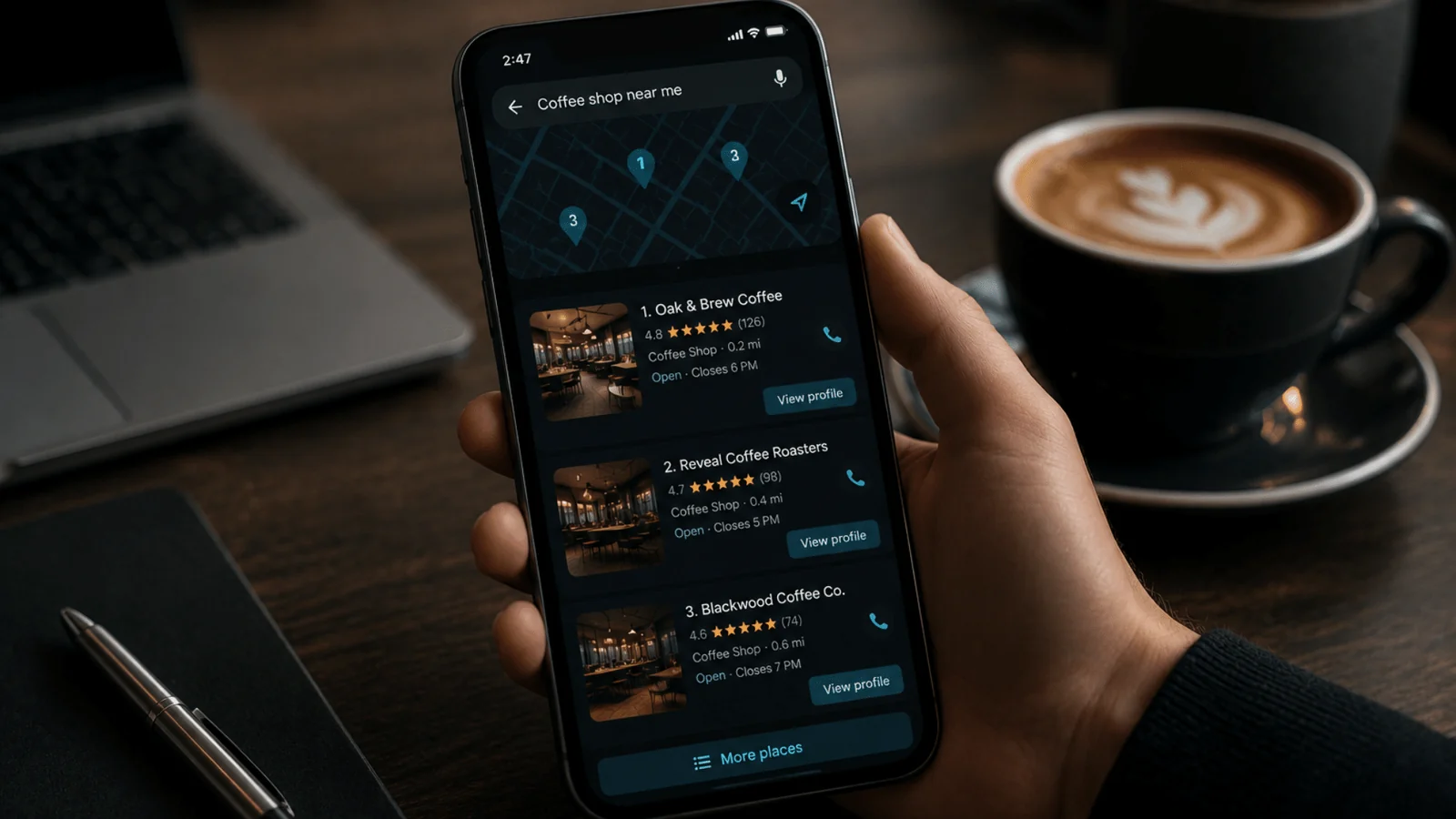


SEO for estate agents comes down to one moment: a vendor in your patch types “estate agents near me” or “best estate agent in [your town]”, and Google decides which agencies to show. If yours isn’t one of them, you don’t get a chance to pitch for the valuation.
The good news is that estate agency SEO is mostly local, and local search is winnable for an independent. You don’t need to outrank Rightmove. You need to be the obvious local choice when someone near you searches. This guide covers what actually matters, in the order I’d tackle it.
Understanding SEO for Estate Agents
SEO (search engine optimisation) means making your website and Google listing the best answer to what people search for. For estate agents, those searches fall into three groups:
- Vendors and landlords looking for an agent: “estate agents in Kenilworth”, “letting agents near me”, “free house valuation Leamington”. These are the searches that win instructions.
- Buyers and tenants looking for property: mostly answered by the portals, and much harder to win on your own site.
- People researching: “how much does an estate agent charge”, “how long does it take to sell a house”. Useful for building trust, and a good place for helpful articles.
Most of your effort should go on the first group. That’s where the fees are.
Keyword Research: The Foundation
Start with the words vendors actually use. Type “estate agents [your town]” into Google and note the suggestions, then do the same for “house valuation” and “sell my house”. Free tools like Google Keyword Planner, or paid ones like SE Ranking (the one I use), show how many people search each phrase and how hard it is to rank.
Look for the specific searches as well as the obvious ones: “estate agents for period properties”, “letting agent for HMOs”, the names of the villages you cover. Fewer people search them, but the people who do are much closer to picking up the phone.
On-Page SEO: Making Your Website Work Harder
Once you know the searches, give each important one a proper page. That usually means:
- A page for sales and a page for lettings, each saying clearly where you work
- A page for each branch or main area you cover, with something genuinely local on it: recent sales, the streets you know, what buyers there want
- A valuation page that makes booking easy, and says what happens at a valuation and how long it takes
On each page, use the main phrase in the page title, the main heading and the opening paragraph, then write naturally. Add descriptive alt text to photos, link between related pages, and make sure everything works on a phone, because that’s where most of these searches happen.
Local SEO: Where Estate Agents Win
For estate agents, local SEO does most of the heavy lifting. When someone searches for an agent, Google shows a map with three agencies on it before anything else. Getting into that box is often worth more than any amount of website work.
Your Google Business Profile
Your Google Business Profile (the listing that appears on Google Maps, previously called Google My Business) needs:
- The right main category (“Real estate agency”, or “Letting agent” for a lettings-only office) and any extra categories that fit
- Accurate opening hours, phone number and address for every branch, each with its own profile
- Real photos of your office, your team and your boards in the area
- Regular posts: new instructions, recent sales, market updates
- Reviews, and replies to them
Reviews
Reviews are where estate agents can pull ahead. Ask every vendor and landlord at completion, and make it easy with a direct link. Encourage people to mention the area and what you did (“sold our flat in Leamington in three weeks”), and reply to every review, including the critical ones. A calm, specific reply to a bad review often reassures the next vendor more than another five stars.
Local Mentions
Make sure your business name, address and phone number are identical everywhere they appear: your website, the portals, directories, your local paper’s business listings. Local links help too: sponsoring a school fair or a local club, writing a market update the local news site will link to, or being listed by the local chamber of commerce.
Content That Builds Trust
Helpful content works well for estate agents because vendors do their research. A few strong pieces beat a blog that’s updated every week with filler:
- A local market update each quarter: what’s selling, how long it’s taking, what’s changed
- Area guides for the places you know best, written from experience rather than copied from Wikipedia
- Plain-English guides to the questions vendors ask you every week: fees, timelines, what to fix before a valuation
Video works too, from short walk-throughs to “a day selling houses in [town]”. Share it on social media by all means. Social media doesn’t directly change your Google rankings, but it gets your name in front of people who’ll later search for it.
Technical SEO and Audits
Technical SEO is the behind-the-scenes work that lets Google read your site properly. It isn’t glamorous, but problems here can hold everything else back. The usual culprits on estate agency sites are:
- Slow pages, often from huge property photos
- Thousands of thin, duplicate property pages from the listings feed, which can swamp the pages you actually want to rank
- Broken links and old listings that now lead nowhere
- Missing basics: HTTPS, a working sitemap, pages Google can’t reach
An SEO audit finds these. Google’s own free tools, Search Console and PageSpeed Insights, are a good place to start. Then keep an eye on Search Console and Google Analytics monthly, and track the number that matters most: valuation requests, not visitors.
SEO Myths for Estate Agents
Myth 1: Instant Results
SEO is slow. Fixing your Google profile can show up in the map results within weeks, but most estate agents see real movement over three to six months, and it keeps building after that. Anyone promising page one by next month is selling something else.
Myth 2: Keyword Stuffing Works
Repeating “estate agents in Warwick” twenty times on a page won’t help, and can hurt. Write for vendors, use the phrase where it fits, and cover the subject properly.
Myth 3: Social Media Doesn’t Matter
It doesn’t directly affect rankings, but it builds the name recognition that leads to people searching for you by name, and that does help.
Myth 4: More Pages Equals Better Rankings
A hundred thin “estate agents in [village]” pages with the same text and a different place name won’t help. A handful of genuinely useful area pages will.
Myth 5: SEO Is a One-Time Job
Your competitors keep working, Google keeps changing, and reviews need to keep coming. SEO works best as steady, ongoing effort.
Bringing It Together
If I were starting from scratch with an independent agency, I’d do it in this order: sort out the Google Business Profile for every branch, set up a simple routine for reviews, build proper sales, lettings, area and valuation pages, then fix whatever technical problems are getting in the way. After that it’s steady work: local content, local links and keeping the profile active.
None of it is complicated. It just takes consistency, which is the part most busy agencies find hardest.
Want a Hand With It?
If you’d rather have someone do this for you, that’s what I do. I’m Rob, I run Peak SEO from Warwick, and I do the work myself, from the first look at your Google profile to the plain-English report each month. My monthly SEO packages have clear, fixed prices and no long contract, and you can move up or down a package as the market changes.
If you’d like to know where your agency stands, tell me about your business and I’ll tell you honestly what I’d fix first.